Hi everyone,
In case you missed our short reflection on day 2 of Learning Impact Europe 2026, please visit this link. It’s essential before you continue to day 3. And if you haven't even read day 1, please do the needful! :)
As popular belief says, “all good things come to an end”, and this was the case with Learning Impact Europe as well. Thursday was the shortest day of the three, but still held a lot in store for us and the remaining participants of LIE2026.
17/9 | 08:50-10:15
Half of our team joined the General Assembly in Hall 1, while I attended the sessions that were held in parallel. I had the opportunity to listen to Mr. Chris Nitsch and Ms. Elizabeth Robertson Hornsby, talking about how higher education is being affected and actually reshaped by the use of digital credentials and AI. They emphasized the need for an intentional alignment between course design, assessment and learner records into a coherent ecosystem, rather than simply layering AI and credentials on existing structures.
17/9 | 10:30-11:00
In the next session for our day, we moved to Hall 1, to attend the session titled “National Building Blocks for a Future-Proof EdTech Ecosystem in Europe”, where Ms. Albena Spasova from EdTech Bulgaria, Ms. Annelies Volckaert from our own EdTech Station, Ms. Aleksandra Maravic from EdTech Italy, and Ms. Alessandra Chirico who moderated the discussion, reflected on the future of EdTech in Europe through the eyes of established EdTech Associations. Associations that are actively supporting the growth of the EdTech sector, not just in Europe, but also beyond.
17/9 | 11:30-13:00
For the remainder of the session, I stayed in the same room for “Accessibility by Design: A
User-Centred Approach to Digital Assessment” by Mr. Bruno Garcia. The session showcased an assessment tool designed for accessibility and highlighted early observations from the tool usage. Following up on this series of short presentations, I followed Mr. Thierry Koscielniak (PhD) presenting “ViWAS: Digital Europe's Flagship Academy for Virtual Worlds Skills”. A very interesting project that is building Europe’s first sustainable, federated training infrastructure for virtual worlds, extended reality and spatial computing. A project that is close to our hearts as well, as it is being led by CYENS Centre of Excellence, our partner in MetaCivic project, and AETMA Lab, our other partner from the MetaCivic project is a consortium partner.
For the next presentation I watched “Building a sovereign EdTech toolbox: Open-source alternatives” from Ms. Gira Szakmar and Mr. Nathan Lenas who came from Luxembourg Media and Digital Design Centre, to showcase how they are making available open-source tools for the educational community and how they are supporting the adoption of open-source.
17/9 | 14:00-15:15
For the closing sessions for my day, as I had to fly out earlier than the conference end, I attended “Taming the Monster: Simpler, Smarter and AI-Ready QTI” from Mr. Julien Sébire from 1EdTech, in which QTI was discussed. Working with Moodle all these years, I have to admit that I haven’t worked with QTI quite as much as I would have wanted to, so this session offered me an opportunity to understand the standard a bit better.
Next up, was “From Manual to Scalable: Exploring AI-Assisted Item Generation & Validation” from Mr. Miguel Prieto. In this session, we saw how we can assess questions with the use of AI, and also looked at what is called Automated Item Generation (AIG). We were confronted with some interesting challenges on quality, validity, usability and governance of the assessments and realized how AI-driven question generation can be quite useful if managed properly.
The very last session of LIE2026 for me, was “From Paper to Platform: AI and Open Standards for Exam Digitization” from Ms. van Staveren and Mr. de Klein. This presentation focused on how we can use LLMs, to extract questions, answer options, scoring rubrics and metadata from PDF and word documents that have been the main vehicle for sharing assessments for many years. Initially, AI is used to extract the questions, and to transform them in QTI so that they can be shared successfully. Still, towards the goal of building smarter question banks, humans are very much needed to monitor the process and bring trust.
...and that's a wrap for LIE 2026
Looking forward to the next edition!
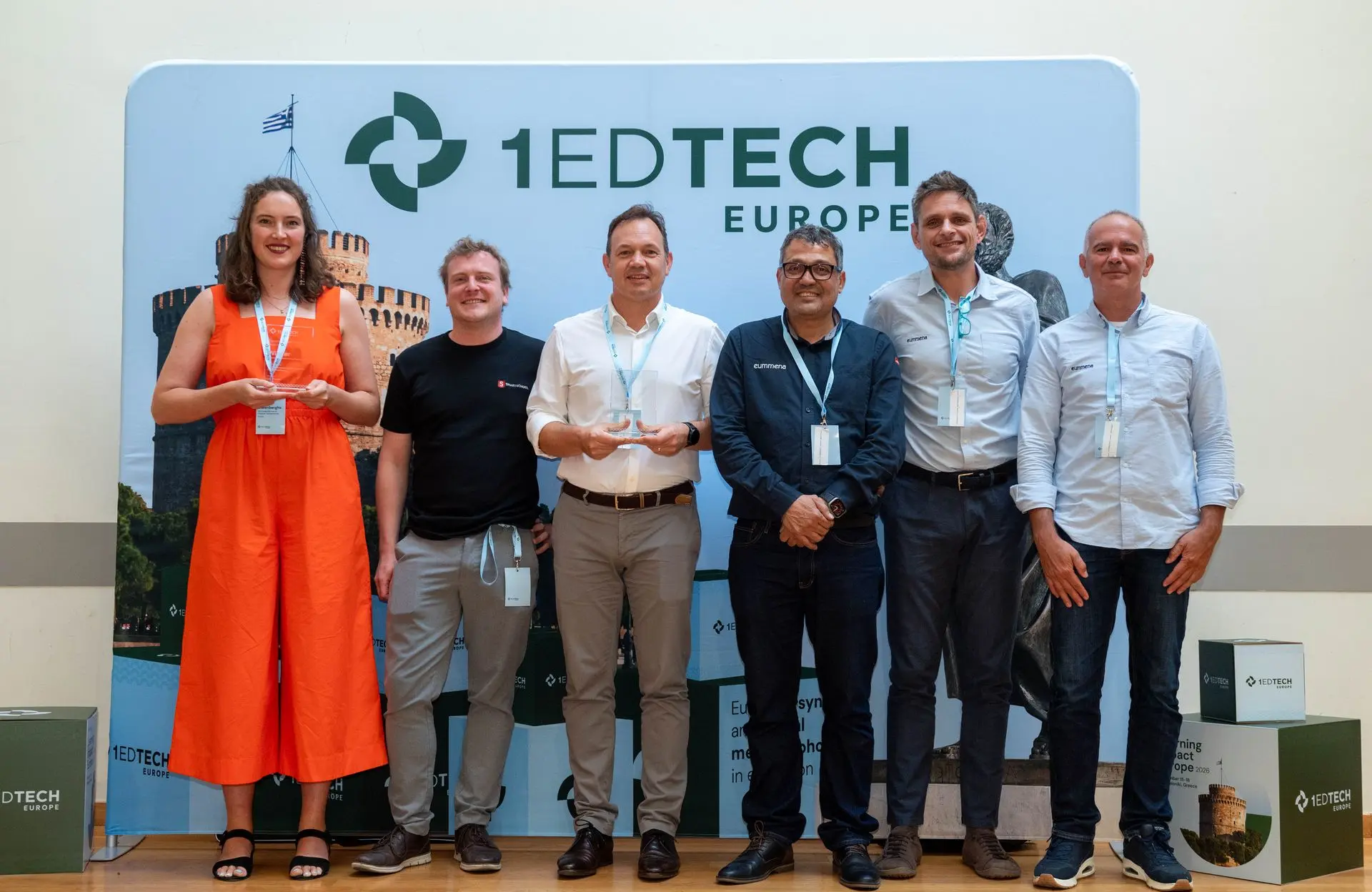
Learning Impact Europe (day 3)